[et_pb_section fb_built=”1″ _builder_version=”4.25.2″ _module_preset=”default” custom_padding=”6px|||||” global_colors_info=”{}”][et_pb_row _builder_version=”4.25.2″ _module_preset=”default” global_colors_info=”{}”][et_pb_column type=”4_4″ _builder_version=”4.25.2″ _module_preset=”default” global_colors_info=”{}”][et_pb_text _builder_version=”4.25.2″ _module_preset=”default” global_colors_info=”{}”]Compression socks are specialized hosiery designed to improve blood flow, reduce swelling, and enhance overall leg health. These socks apply graduated pressure to the legs, which means the pressure is strongest at the ankle and gradually decreases as it moves up the leg. They are commonly used to treat and prevent a variety of medical conditions, such as deep vein thrombosis (DVT), varicose veins, and chronic venous insufficiency. Additionally, they are popular among athletes and individuals who spend long periods standing or sitting.[/et_pb_text][et_pb_text _builder_version=”4.25.2″ _module_preset=”default” custom_margin=”||4px|||” custom_padding=”||0px|||” global_colors_info=”{}”]
Types of Compression Socks
There are several types of compression socks, categorized based on their compression levels and the specific needs they address:
- Graduated Compression Socks: These provide the highest level of compression at the ankle and gradually decrease up the leg. They are often prescribed for medical conditions and come in various strengths, measured in millimeters of mercury (mmHg).
- Anti-Embolism Socks: Also known as thromboembolism deterrent (TED) hoses, these are designed for individuals who are bedridden or immobile, such as patients recovering from surgery. They help prevent blood clots in the legs.
- Non-Medical Support Hosiery: These include over-the-counter compression socks that provide mild compression and are used for general comfort and to relieve minor swelling and fatigue.
[/et_pb_text][et_pb_text _builder_version=”4.25.2″ _module_preset=”default” global_colors_info=”{}”]
How Compression Socks Work
[/et_pb_text][et_pb_image src="https://devdtm.com/wp-content/uploads/2024/07/How-Compression-Socks-Work.jpg" alt="How Compression Socks Work" title_text="How Compression Socks Work" _builder_version="4.25.2" _module_preset="default" global_colors_info="{}"][/et_pb_image][et_pb_text _builder_version="4.25.2" _module_preset="default" global_colors_info="{}"]Compression socks work through the application of graduated pressure to the legs, aiding in the efficient flow of blood back to the heart. Here’s a detailed look at the mechanisms:
- Promoting Blood Flow: By compressing the surface veins, arteries, and muscles, the socks force circulating blood through narrower channels. This increases the arterial pressure, causing more blood to return to the heart and less blood to pool in the feet.
- Reducing Swelling: The pressure helps reduce the diameter of major veins, which increases the velocity of venous blood flow and helps to prevent edema, or swelling caused by fluid retention.
- Preventing Blood Clots: By promoting better circulation, compression socks help to prevent the formation of blood clots, particularly in individuals who are at higher risk due to prolonged immobility or certain medical conditions.
Enhancing Athletic Performance: Athletes use compression socks to improve oxygen delivery to muscles, reduce muscle fatigue, and accelerate the removal of metabolic waste products during and after exercise.[/et_pb_text][et_pb_text _builder_version=”4.25.2″ _module_preset=”default” global_colors_info=”{}”]
Benefits of Compression Socks
The benefits of wearing compression socks are numerous and cater to a wide range of individuals, from those with medical conditions to healthy people seeking improved leg health.
- Medical Benefits: Compression socks are an essential tool in managing chronic venous diseases, lymphedema, and preventing DVT. They are often prescribed post-surgery to promote recovery and prevent complications.
- Comfort and Relief: For people who spend long hours on their feet or sitting, such as healthcare workers, travelers, and office workers, compression socks can relieve leg fatigue and discomfort.
Athletic Use: Athletes benefit from enhanced performance, quicker recovery times, and reduced muscle soreness when using compression socks during and after workouts.[/et_pb_text][et_pb_text _builder_version=”4.25.2″ _module_preset=”default” global_colors_info=”{}”]
How to Choose and Use Compression Socks
[/et_pb_text][et_pb_image src="https://devdtm.com/wp-content/uploads/2024/07/How-to-Choose-and-Use-Compression-Socks.jpg" alt="How to Choose and Use Compression Socks" title_text="How to Choose and Use Compression Socks" _builder_version="4.25.2" _module_preset="default" global_colors_info="{}"][/et_pb_image][et_pb_text _builder_version="4.25.2" _module_preset="default" global_colors_info="{}"]
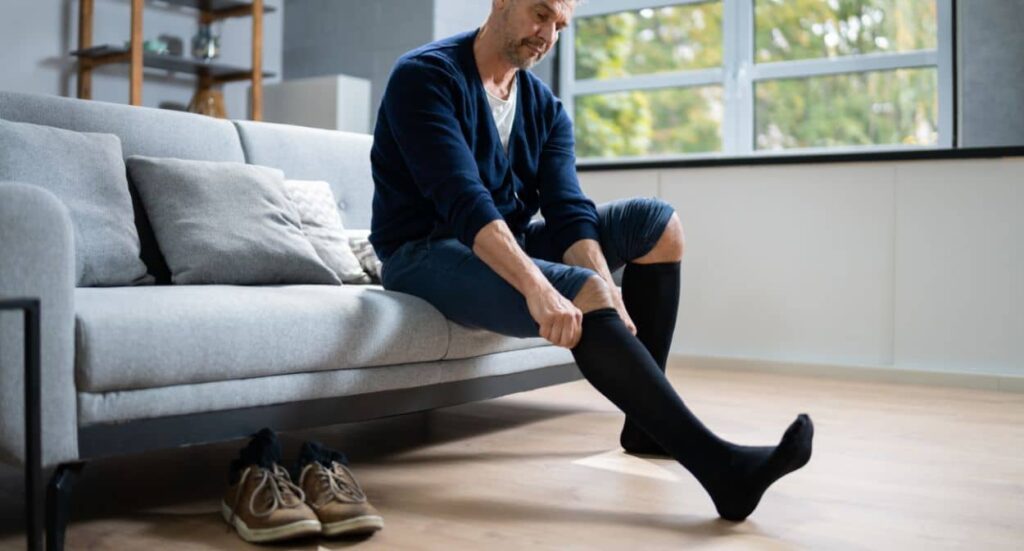
Choosing the right compression socks involves considering the level of compression needed and ensuring proper fit:
- Compression Levels: Measured in mmHg, common compression levels are:
- Mild (8-15 mmHg): For minor swelling and fatigue.
- Moderate (15-20 mmHg): For mild varicose veins, travel, and pregnancy.
- Firm (20-30 mmHg): For moderate varicose veins, edema, and post-surgery recovery.
- Extra-Firm (30-40 mmHg): For severe varicose veins, severe edema, and DVT.
[/et_pb_text][et_pb_text _builder_version=”4.25.2″ _module_preset=”default” custom_margin=”-20px|||||” global_colors_info=”{}”]
Conclusion
Compression socks are a versatile and effective tool for improving leg health, enhancing athletic performance, and managing medical conditions. By applying graduated pressure, they promote better blood circulation, reduce swelling, and prevent complications such as blood clots. Selecting the right type and compression level, along with ensuring a proper fit, can maximize the benefits and improve overall comfort and well-being.
[/et_pb_text][/et_pb_column][/et_pb_row][/et_pb_section]